
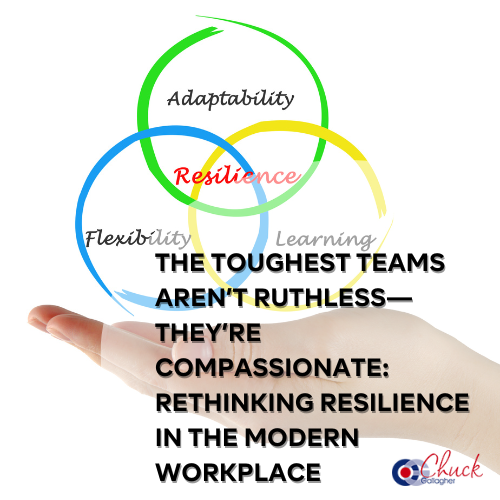
In boardrooms and break rooms alike, we’ve long equated “resilience” with grit, emotional suppression, and mental armor. But a groundbreaking study from NC State and James Madison University flips that narrative on its head.
It turns out, the real source of workplace strength isn’t cold detachment—it’s compassion.
As a business ethics keynote speaker and leadership consultant, I’ve spent years helping organizations navigate crises. And what I’ve seen time and time again is this: The people who bend don’t break. And the teams who lead with empathy perform better—even when trust has been breached.
So, what does the science say? Let’s break it down.
The Study: Broken Promises and Emotional Fallout
Researchers studied what happens when companies break “psychological contracts”—those unspoken agreements between employers and employees. Think: the raise that never came, the promotion that was promised but postponed, or the workload that quietly doubled with no support.
Most employees feel betrayed. Many mentally check out. Some quit.
But a surprising pattern emerged: Those who displayed higher levels of compassion—toward themselves and toward others—stayed focused, stayed strong, and stayed in the game.
Compassion didn’t make them weak. It made them anti-fragile.
So… What Exactly Is Compassionate Resilience?
Let’s be clear: Compassion isn’t coddling. It’s not a soft-skills seminar or a free lunch. True compassion at work means:
- Recognizing that setbacks don’t define people
- Being honest about failure—without shaming
- Supporting others and holding them accountable
- Allowing room for frustration, then moving forward anyway
And here’s the twist: Self-compassion is just as important.
Employees who responded to broken promises without spiraling into shame or self-doubt were better at regulating emotions, staying productive, and—most critically—maintaining trust in themselves and others.
Why This Matters Now More Than Ever
Post-pandemic, we’re living in the aftermath of widespread broken promises:
- Financial stress from layoffs, frozen raises, and disrupted careers
- Relational strain from remote work, fractured teams, and burnout
- Health anxiety still lingering after years of uncertainty
It’s the perfect storm. And yet… this is also the perfect opportunity.
Compassion—real, structural, modeled-from-the-top compassion—isn’t just good for morale. It’s a performance strategy.
Leadership Insight: Culture Is Built in Crisis
As leaders, we must stop treating resilience like a solo sport. The “toughest” person in the room might not be the one who speaks the loudest or logs the most hours. It might be the one who says, “I see you’re struggling—how can I help?” and then delivers under pressure anyway.
We build that kind of workplace by:
- Normalizing emotional honesty, not punishing it
- Training managers in compassionate communication
- Giving teams space to grieve, adapt, and grow after trust has been shaken
- Redefining ‘grit’ to include grace
🔍 Five Thought-Provoking Follow-Up Questions
- How do we train leaders to see compassion as a competitive advantage?
- What happens to workplace trust when compassion is missing?
- Can performance improve in the absence of psychological safety?
- How do we measure compassion-driven resilience in a results-focused environment?
- Should self-compassion training be part of every leadership development program?
