
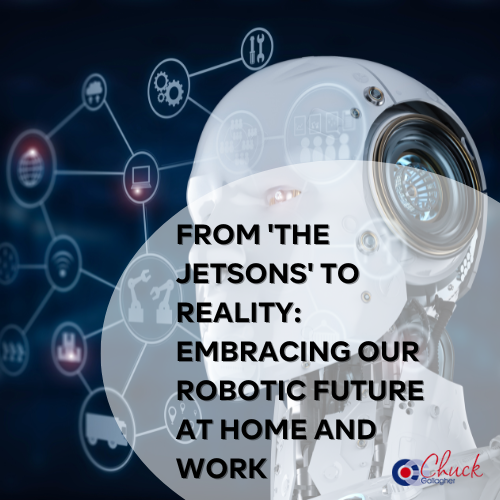
 As an AI speaker and author, I’ve always been captivated by how science fiction often predicts technological advancements. Take “The Jetsons,” for example—a 1960s animated series that introduced us to a world where robots like Rosie handled household chores, and automation was seamlessly integrated into daily life. Fast forward to today, and we’re witnessing the dawn of that envisioned future, both in our homes and workplaces. But as we stand on the cusp of this robotic revolution, are we truly prepared to embrace and enjoy it?
Rosie 2.0: The Rise of Domestic Humanoids
Imagine coming home after a long day to find your laundry folded, floors vacuumed, and dinner prepped—not by a human helper, but by a humanoid robot. This isn’t a scene from a sci-fi movie; it’s the promise of NEO Gamma, the latest creation from 1X Technologies. Designed specifically for home environments, NEO Gamma boasts advanced AI capabilities, allowing it to perform a variety of household tasks with human-like dexterity. Its natural gait and ability to interact seamlessly with household items make it an ideal candidate for domestic assistance.
NEO Gamma’s design prioritizes safety and integration. Outfitted with soft covers and a soft-knit suit, it ensures safe interactions within the home, reducing the risk of accidents. Its AI-driven conversational abilities enable natural interactions, making it more than just a tool—it’s a companion. The robot’s ability to learn and adapt to different household scenarios means it can handle tasks that were once considered too complex for machines.
Factory Floors Meet Futuristic Figures
The industrial sector isn’t left behind in this robotic renaissance. BMW’s Spartanburg plant in South Carolina recently conducted a trial run with Figure 02, a humanoid robot developed by the California-based company Figure. This robot successfully inserted sheet metal parts into specific fixtures, a task requiring precision and dexterity. By taking over such ergonomically challenging tasks, Figure 02 not only enhances production efficiency but also ensures the safety and well-being of human workers.
Standing at approximately 170 cm tall and weighing 70 kilograms, Figure 02 is designed to operate in environments built for humans. Its ability to perform tasks with millimeter-level accuracy showcases the advancements in robotic dexterity and precision. The successful integration of Figure 02 into BMW’s production line marks a significant step toward a future where humans and robots work side by side, each complementing the other’s strengths.
The Fun Side of a Robot-Integrated Life
Beyond the practical benefits, the integration of robots into our daily lives opens up a realm of fun and exciting possibilities. Imagine hosting a dinner party where your humanoid assistant not only helps prepare the meal but also entertains guests with stories or even dance moves. Or consider the joy of having a robot that can teach your children new languages, assist with homework, or play interactive games, making learning both engaging and enjoyable.
In industrial settings, robots can take over monotonous tasks, allowing human workers to focus on more creative and fulfilling aspects of their jobs. This shift could lead to a more satisfied workforce, increased innovation, and a reimagining of job roles that prioritize human ingenuity over repetitive labor.
Embracing the Future: Are We Ready?
While the advancements in humanoid robotics are thrilling, they also prompt us to reflect on our readiness to embrace this future. Here are some considerations:
- Ethical Implications: As robots become more integrated into our lives, questions about privacy, autonomy, and the ethical treatment of machines arise. How do we ensure that AI systems make decisions that align with our values?
- Economic Impact: The automation of tasks traditionally performed by humans could lead to job displacement in certain sectors. How do we prepare the workforce for this shift? What new opportunities will emerge in a robot-integrated economy?
- Social Acceptance: Humanoid robots challenge our perceptions of companionship and interaction. Will people readily accept robots as part of their households or workplaces? How do we address concerns about human-robot relationships?
- Safety and Reliability: Ensuring that robots operate safely in dynamic environments is crucial. What measures are in place to prevent accidents? How do we build trust in these machines?
A Playful Peek into a Robotic Tomorrow
Let’s indulge in a lighthearted envisioning of our future with humanoid robots:
- Morning Routine: Your personal robot assistant brews your coffee just the way you like it, lays out your outfit for the day, and even gives you a briefing on the morning news. Oh wait – we’re not far off…since your coffee maker will auto brew your favorite cup of Joe and Alexa or a host of other digital assistants will curate your news.
- Commute Companion: On your way to work, your robot updates you on traffic conditions, suggests alternative routes, and plays your favorite tunes to kickstart your day. Again, there’s Waze which not only autocalculates alternate “waze” to get there but will also alert you to “police reported ahead.”
- Office Operations: At work, robots handle data entry, schedule meetings, and manage inventory, freeing you up to brainstorm the next big idea. Don’t get me started with this…the list is endless.
- Evening Entertainment: Back home, your robot prepares a delicious dinner, engages in a friendly game of chess, and even recommends movies based on your mood. Hum…now I’m waiting on the dinner bot, but it’s coming!
Conclusion: Dancing with Droids
The journey from “The Jetsons” to our present reality showcases the incredible strides we’ve made in robotics and AI. Humanoid robots like NEO Gamma and Figure 02 are not just technological marvels; they represent a shift toward a future where machines enhance our daily lives, both at home and work. Embracing this future with a sense of fun and curiosity allows us to explore new possibilities while addressing the challenges that come with such profound change.
As we stand on the brink of this new era, let’s welcome our robotic companions with open arms and open minds, ready to dance into a future where humans and machines create harmonious symphonies together.
