

By Chuck Gallagher — Business Ethics Keynote Speaker and Trainer
TL;DR: Chuck Gallagher, a business ethics keynote speaker and former fraudster, examines the 30-year sentence of exiled Chinese billionaire Guo Wengui through his PIT framework — Promise, Illusion, Trust. Gallagher argues that Guo’s anti-Communist crusade was the illusion that manufactured the trust needed to raise more than $1 billion, with alliances to right-wing media supplying the borrowed credibility that turned belief into money.
The courtroom in lower Manhattan was packed with people who still believed in him. On June 29, 2026, as Guo Wengui was led out after a federal judge sentenced him to 30 years in prison, his supporters applauded. Judge Analisa Torres had just ordered him to forfeit $889 million and described a fraud that cost more than 1,000 people their savings. And still, they clapped. That single detail — devotion that survived the verdict — is the most important fact in the entire case, because it explains how one man raised more than $1 billion from people who thought they were funding a revolution.
Most coverage of a fraud this size fixes on the money: the $37 million yacht, the Lamborghini, the dollar figures. After three decades of sitting with my own choices and their consequences, I describe every fraud differently — as a PIT, which stands for Promise, Illusion, and Trust. The promise is what victims are told they will receive. The illusion is the story that makes the promise believable. Trust is the bridge the money crosses to reach the fraudster. The promise gets the headlines. The real machinery sits in the other two letters, and Guo Wengui built one of the most effective illusion-and-trust engines I have studied. Strip away the politics and the scale, and the structure is the same one I once used myself.
Why Did So Many People Believe Guo Wengui?
Guo did not arrive in New York as a nobody. Once ranked among China’s wealthiest men — the 2014 Hurun list put his fortune near $2.6 billion — he fled China, watched his government seize much of his empire, and rebuilt himself as something more powerful than rich. He became a martyr. As a business ethics keynote speaker, I see this move constantly, because it is the most efficient one in the entire playbook. Guo turned into a loud, public critic of the Chinese Communist Party, sharing what he claimed was insider knowledge of corrupt officials. He was not selling an investment return. He was selling a cause. The illusion had almost nothing to do with money and everything to do with identity.
How Does an Illusion Turn Into Trust?
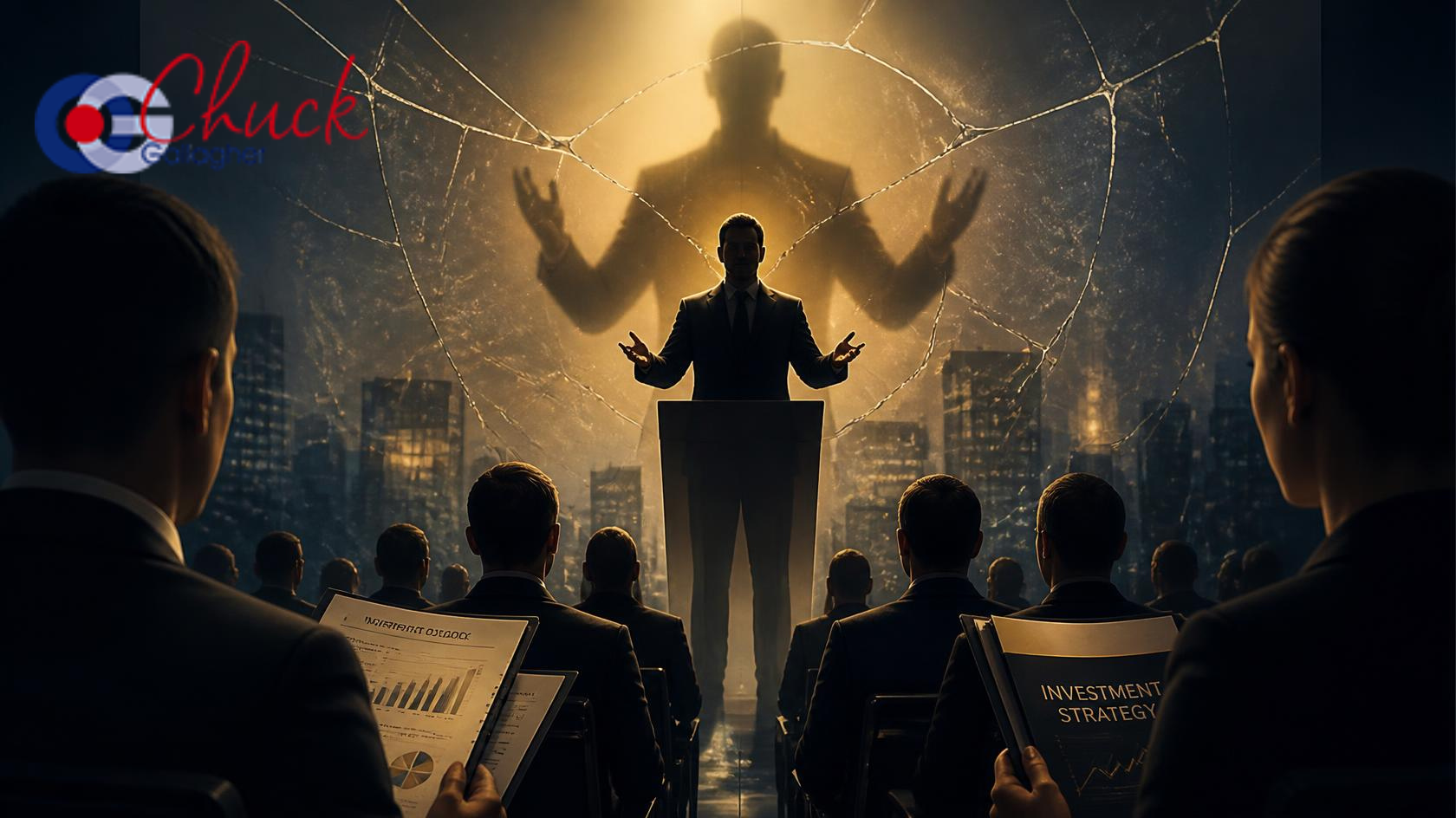
This is where Guo was genuinely skilled, and where the lesson lives for the rest of us. An illusion by itself moves no money. It has to be validated by sources the victim already trusts. So Guo cultivated relationships with prominent American right-wing media figures and political operatives who shared his anti-Communist posture. He appeared alongside Steve Bannon, and in 2020 the two launched a campaign they called the New Federal State of China. Those alliances did something no sales pitch could accomplish: they borrowed credibility. When someone an audience already trusts stands next to the man running the illusion, the trust transfers. The victims stopped evaluating Guo and started trusting the movement and the familiar faces that vouched for him.
That is the quiet engine of the PIT. Guo never had to prove the investments were sound. He only had to prove that he was real — a true dissident, a genuine enemy of Beijing — and let trusted platforms carry that proof to an audience already primed to believe it. Between 2018 and 2023 he raised more than $1 billion through ventures including GTV Media Group, the Himalaya Farm Alliance, and the Himalaya Exchange, along with a members club carrying a $10,000 buy-in. Investors believed they were bankrolling a fight for democracy. Prosecutors said the money instead bought a $37 million yacht, a $1 million Lamborghini, a Manhattan penthouse, and a 50,000-square-foot New Jersey mansion. The gap between what supporters believed and where the money went is the entire crime.
What Was Guo Wengui’s Real Motivation?
Here is the part I find most instructive. Guo had already been a billionaire once. This was not a poor man reaching for a first fortune; it was a man restoring a lifestyle he had lost and believed he was owed. His grievance was partly real — Beijing did pursue him, and a court probation officer noted scars from torture he survived. A genuine grievance makes the most durable illusion of all, because the person selling it is not entirely lying. He believes the cause. He simply discovered that the cause produced money and devotion, then made a sequence of choices, each one easier than admitting the last had been a lie. That is almost always how these stories begin — not with a grand plan to steal a billion dollars, but with one small choice and no willingness to take the off-ramp.
What Should Leaders Learn From the Guo Wengui Case?
The uncomfortable truth is that the more principled your audience, the more vulnerable they are to an illusion built on principle. Guo’s victims were not greedy fools. Many were idealists who genuinely wanted democracy for China, and their values became the attack surface. This is why I tell every group I work with as a business ethics keynote speaker that ethics is a leadership problem, not a compliance checklist. No disclosure form catches a man who has borrowed his trust from people you already admire. The defense is both harder and simpler than a policy: separate the cause from the custody of your money, and never let admiration for a mission substitute for verification of where the dollars actually go. Guo’s 30-year sentence and $889 million forfeiture are the consequence. The choice that produced them was made quietly, years earlier, the first time belief proved more profitable than honesty.
Frequently Asked Questions
Who is Guo Wengui?
Guo Wengui, also known as Miles Guo and Ho Wan Kwok, is a self-exiled Chinese businessman once ranked among China’s wealthiest men. On June 29, 2026, a Manhattan federal court sentenced him to 30 years in prison for a fraud that raised more than $1 billion from supporters between 2018 and 2023, and ordered him to forfeit $889 million.
What is the PIT framework in fraud?
The PIT framework, coined by Chuck Gallagher, a business ethics keynote speaker and former fraudster, stands for Promise, Illusion, and Trust — the three elements every fraud requires. The promise is what victims expect to receive, the illusion is the story that makes the promise believable, and trust is what lets victims hand over their money.
How did Guo Wengui gain his investors’ trust?
Guo built an illusion as a persecuted critic of the Chinese Communist Party, then borrowed credibility by aligning with trusted right-wing media figures and political operatives, including Steve Bannon. That validation transferred trust from familiar public figures to Guo, persuading supporters they were funding a political movement rather than an investment scheme.
What was Guo Wengui sentenced to?
On June 29, 2026, Judge Analisa Torres sentenced Guo Wengui to 30 years in federal prison and ordered him to forfeit $889 million. A jury had convicted him in 2024 on nine of 12 counts, including securities fraud, wire fraud, and money laundering.
Bring This Conversation to Your Team
Every organization believes it would spot a fraud like this. Most would not, because the strongest illusions are built on the values an audience already holds. Chuck Gallagher helps leadership teams, associations, and finance organizations understand how good people get pulled into bad choices — and how to build cultures where the off-ramp is always visible. To bring this conversation to your next event, visit ChuckGallagher.com.
Five Questions for Reflection
- Guo’s victims were idealists, not the greedy. How does that change the way you think about who is actually vulnerable to fraud?
- In the PIT framework, which is harder to defend against — a false promise or a borrowed trust? Why?
- Where in your own organization does admiration for a person or mission quietly substitute for verification of the facts?
- Guo’s grievance against Beijing was partly real. How does a genuine truth make an illusion more dangerous, not less?
- What is the off-ramp in your business — the moment someone could admit a problem before it becomes a fraud — and is it safe for people to take it?
