
By Chuck Gallagher — Business Ethics Keynote Speaker and Trainer
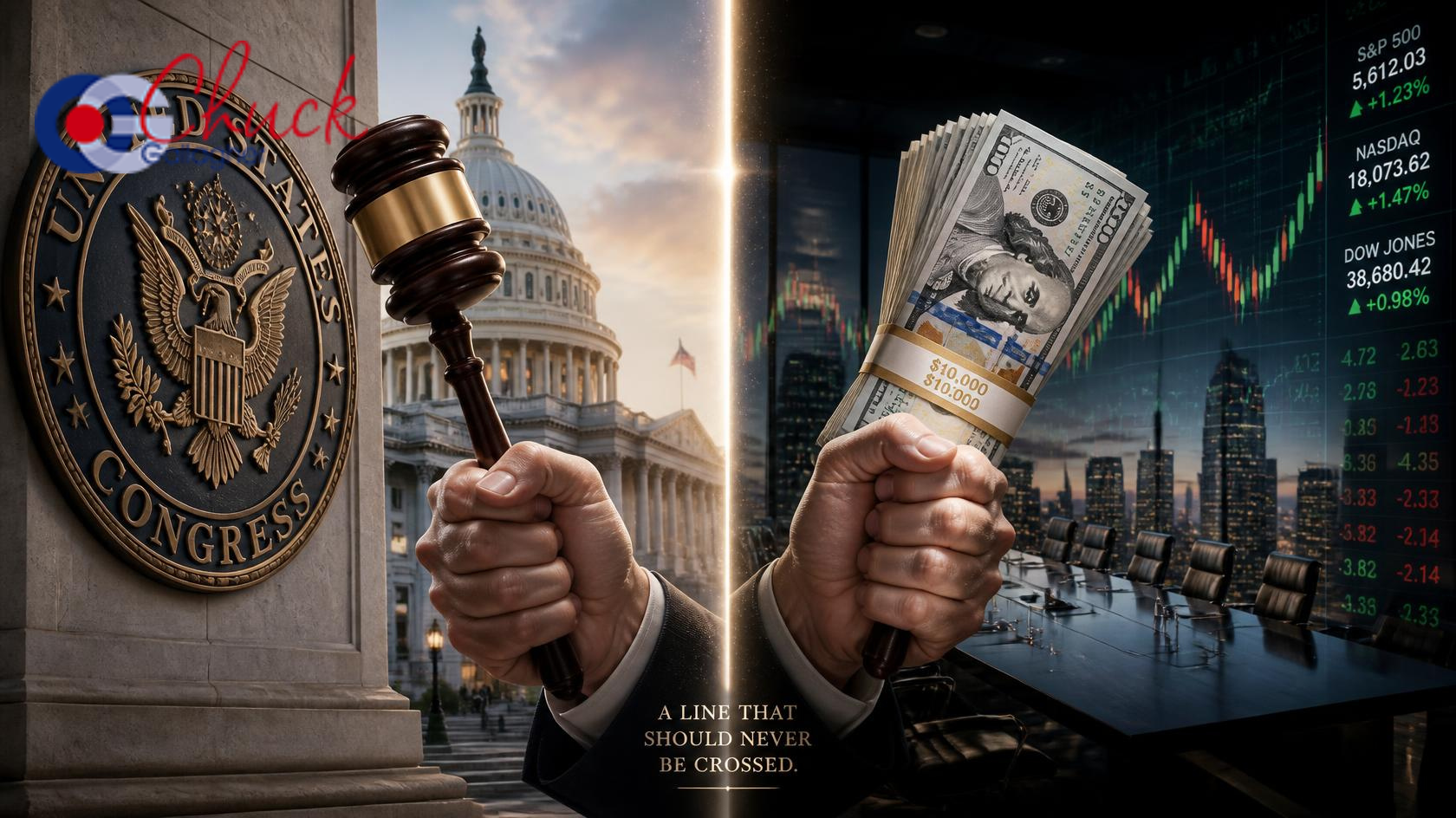
TL;DR: Chuck Gallagher, business ethics keynote speaker, argues that the Trump–Dell endorsement saga points past one president to something larger: a Washington culture that has grown too comfortable blurring the line between public duty and private gain.
What Actually Happened With Trump and Dell?
On February 10, 2026, an account in President Trump’s name bought between $1 million and $5 million in Dell stock, at roughly $126 a share. That figure comes straight from his own filing with the Office of Government Ethics. Nine days later, at a rally in Rome, Georgia, he told the crowd to “go out and buy a Dell computer.” He said it again in May at a White House luncheon — the same day he signed the ethics report documenting those very trades. He said it a third time in July, in the Oval Office, with Dell’s founder standing a few feet away. Somewhere in that stretch, the Pentagon handed Dell a five-year, $9.7 billion contract.
The stock climbed. Retail investors piled in. And the White House said what White Houses always say. No conflict. The assets sit in a trust managed by his children. The president, a spokesperson insisted, “only acts in the best interests of the American public.”
Now, I want to be fair here. There’s a real counterargument, and it deserves its say. Dell is no shell company. It posted record revenue of $43.8 billion last quarter, most of it riding the boom in AI servers. One analyst put it plainly: institutional money doesn’t move because a president talks — only retail does. So maybe the stock was climbing anyway. Maybe the endorsements were noise.
Maybe. But notice something. While the president was telling ordinary folks to buy, the people who actually run Dell were selling. A director unloaded more than $27 million in shares. The general counsel let go of twenty thousand more. The insiders were heading for the exit while the public got waved toward the door.
Is This About One President, or Something Bigger?
Here’s where I’d ask you to widen the lens. Make this about Trump and you’ll miss the lesson entirely.
As a business ethics keynote speaker, I’ve spent years in rooms with executives who crossed a line and swore, right up until the handcuffs, that they never did. The pattern almost never starts with a villain. It starts with a person who has quietly convinced himself the rules are for other people. And that conviction doesn’t belong to one party or one man. It has become the water Washington swims in.
Congress passed a law in 2012 called the STOCK Act. Its whole purpose was to stop lawmakers from trading on what they learn behind closed doors. Members of both parties have since blown past its deadlines, paid the piddling fines, and kept right on trading. Both sides. The revolving door between the agencies and the industries they regulate spins so fast you’d get dizzy watching it. Red team, blue team — doesn’t matter. This is a mirror problem. The people writing the rules keep writing themselves an exemption.
Why Does “Technically Legal” Keep Failing the Smell Test?
A trust managed by your own children is not a blind trust. You can call it one. The law might even let you. But everybody in the room knows the difference, and so do you.
That’s the trap of “technically legal.” It’s the phrase people reach for when their gut already told them the answer and they didn’t care for it. There’s a space between what the law allows and what your conscience knows. I’ve got a name for it. The integrity gap. Every scandal I’ve ever studied lived right there. The choice was legal. The consequence was ruin.
A former White House ethics lawyer — one who served a Republican president — called the Dell trades “egregious,” then added something worth chewing on. Even without the trading, he said, a president praising one company by name breaks the standards of conduct every other federal employee has to follow. Sit with that. The clerk in the mailroom cannot endorse a stock. The man at the top can do it on camera, three times, and his people call it patriotism.
What Does This Cost the Rest of Us?
Here’s the part nobody puts on a filing. Every time this happens and nothing happens back, a little more trust drains out of the system. The retail investor who bought Dell near the top because the president said so — he’s the one holding the bag if the endorsement was only talk. The company that bid fair and lost the federal contract learns the game was rigged from the start. And the kid watching all of it? He learns that ethics is for suckers.
That’s the real consequence. It doesn’t show up as a fine or a headline. It’s the slow conversion of a country that expected its leaders to serve into one that assumes they’ll serve themselves.
I built my whole second act on one idea, and I say it from every stage I stand on as a business ethics keynote speaker: every choice has a consequence. I learned it the hard way, from the inside of my own failure, and I have never found a room where it didn’t apply — not a boardroom, not a courtroom, and now, apparently, not the Oval Office. The choice to blur that line always costs something. The only question is who pays, and when.
Frequently Asked Questions
Did Trump break the law by telling people to buy Dell stock?
The White House says there’s no conflict of interest, pointing to that trust managed by his children. Ethics experts don’t buy it. A former Republican White House ethics lawyer called the trades “egregious” and said even praising a company by name violates the standards of conduct every executive branch employee has to follow. Nothing has been formally adjudicated, which is why the sharper question here is an ethical one long before it’s a legal one.
Is a trust managed by your children the same as a blind trust?
No. The whole point of a blind trust is that the official genuinely can’t know what it holds or trades. Put family in charge and that wall comes down. Earlier presidents relied on a stricter arrangement, and specialists say this one doesn’t clear the bar.
Why did Dell’s stock go up — the endorsements or the business?
Both, most likely. Dell posted record quarterly revenue of $43.8 billion on the back of AI server demand, and plenty of analysts will tell you institutional money ignores presidential chatter completely. Then again — the stock jumped on the exact days he praised it, and retail investors clearly followed him in. Take from that what you will.
Is political self-dealing a partisan problem?
Not really. Look at the STOCK Act of 2012 — passed to stop congressional insider trading, ignored by members of both parties ever since, and enforced on almost nobody. This one lives in both parties, across administrations.
What’s the real cost when leaders blur public duty and private gain?
Trust. That’s the cost. The retail investor who bought on a leader’s word can be left eating the loss. The honest competitor who bid straight and lost starts to figure the whole process is tilted. And everybody watching slowly stops believing the system was ever fair. None of that lands on a disclosure form. It just compounds, quietly, year after year.
Bringing This Into Your Organization
The Dell story will fade from the headlines. The pattern won’t. Organizations that stay on the right side of that line don’t get there by accident — they get there by building a culture where “technically legal” is never the last word. That’s the work I bring to stages and boardrooms across the country. If you’re ready for an honest conversation about ethics, consequence, and the choices that define your organization, learn more at ChuckGallagher.com.
Five Questions for Reflection
1. Where in your own organization does “technically legal” get used to end a conversation that should keep going?
2. If the people at the top of your company endorsed a product they quietly owned, how would your customers find out — and would they trust you afterward?
3. What’s the difference, in your own conduct, between what the rules allow and what your conscience knows?
4. Have you ever watched leaders exempt themselves from a standard they enforced on everyone else? What did it teach the people who were watching?
5. When trust drains out of a system slowly, who tends to notice first — and why is it so easy to ignore them?
