
By Chuck Gallagher — Business Ethics Keynote Speaker and Trainer
TL;DR: Chuck Gallagher, business ethics keynote speaker, breaks down a 19-count federal indictment alleging four contractors sold the U.S. military aftermarket parts at original-equipment prices, and explains why a working ethics program is the cheapest insurance a government contractor will ever buy.
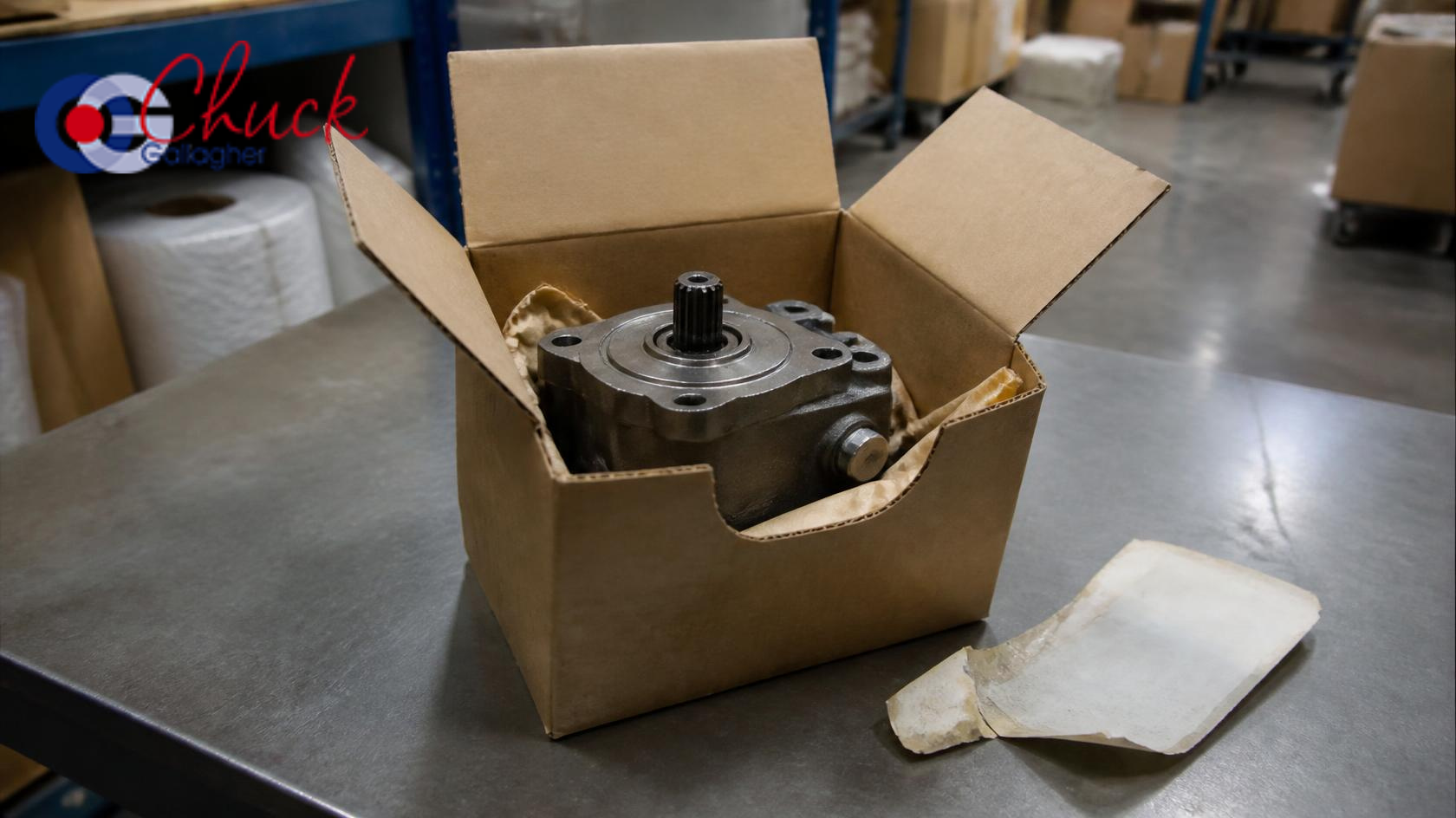
Somewhere in a warehouse, someone is peeling a label off a box.
The part inside might be a fuel injector. A turbocharger. A generator. The paperwork says it came from the original equipment manufacturer. Federal prosecutors in Tennessee say the paperwork lied.
On June 17, 2026, a federal grand jury in Knoxville returned a 19-count indictment against four men: David Turner of Walkertown, North Carolina; Roger Wolfgram and Adam Boudet, both of Augusta, Georgia; and Alex Bath of Maryville, Tennessee. The charge is conspiracy to commit wire fraud. Turner and Wolfgram also face money laundering counts. All four appeared before U.S. Magistrate Judge Debra C. Poplin on June 30, entered pleas of not guilty, and were released pending a trial set for September 8, 2026, before U.S. District Judge Thomas A. Varlan.
These are allegations, and that word matters. Every one of these men is presumed innocent, and the government still has to prove its case to a jury. Even so, the story the indictment tells deserves your attention, because as a business ethics keynote speaker I have watched some version of it play out in company after company. It almost never starts where folks think it does.
What Does the Indictment Actually Allege?
The government says the four men conspired to win contracts with the Defense Logistics Agency to supply original equipment manufacturer parts to the military, then supplied unapproved aftermarket parts instead. There is a gap in there. What was promised, what got shipped. Prosecutors allege the defendants closed it by creating fake labels, creating false documents, and altering documents so the parts would appear to be OEM when they were not. The indictment further alleges a kickback agreement under which Turner took a portion of the profits from selling aftermarket parts at OEM prices, and that Wolfgram paid those kickbacks into a company Turner had created himself. That last piece is the money laundering count.
The exposure is not small. Conspiracy to commit wire fraud carries up to 20 years in prison, a fine of up to $250,000, and up to three years of supervised release. The money laundering charge carries the same 20 years and a fine of up to $500,000. Read that again. Twenty years. Over parts.
Why Does a Parts Substitution Become a Federal Case?
Because of who is standing downstream. A bad fuel injector in a commercial fleet truck means a truck in the shop. Put that same part in a military vehicle and you are talking about whether the mission runs, and on a bad day, whether somebody comes home. The Defense Logistics Agency specifies OEM parts for a reason. The specification is the product. Sell around it and what you have actually sold is a lie with a part attached to it.
Now look at the mechanics the government describes. Fake labels. Altered paperwork. A company created to catch the money. None of that happens by accident. Somebody had to decide to print the first label. Somebody had to decide to sign the first document. Then somebody decided to do it again, and that repeat is the part people miss. The first choice is a moment. By the nineteenth count you are looking at a habit somebody built.
What Would a Working Ethics Program Have Caught?
Here is what frustrates me about a case like this one. Nearly every element the indictment describes is catchable. And catchable by controls that cost almost nothing next to a federal defense. Removing opportunity isn’t rocket science.
Match the certificate of conformance against the actual purchase order. Don’t just file it. Pull parts off the receiving dock at random and put your hands on the hardware to see whether it matches the documentation. The label tells you whatever it was printed to tell you. Separate the duties so the person sourcing a component is never the person who certifies it. Build a reporting channel employees will actually use, which means anonymous, which means routed outside the chain of command, which means somebody follows up so the workforce learns the thing works. Then run margin analysis that asks the obvious question when a line item suddenly earns three times what it earned last year.
That last one matters more than most executives want to hear. Fraud shows up in the numbers long before it shows up in a subpoena. An odd margin. A supplier nobody can quite explain. A payment routed to an entity that did not exist eighteen months ago. Somebody inside that organization saw something. Somebody always does. The only question is whether the company ever built them a door.
Where Do Government Contractors Get This Wrong?
They buy the binder. As a business ethics keynote speaker I have stood in conference rooms while leadership pointed proudly at a code of conduct nobody had opened since orientation. We think a document like that keeps people ethical. It doesn’t. Not even close. A program is a set of behaviors people practice when the money is on the line and nobody is looking.
And understand the incentive the indictment describes. Turner allegedly took a cut of the spread between what the aftermarket part cost and what the government paid for the OEM price. If that allegation holds up, the shortcut had a commission attached to it. Show me how you pay people and I will tell you what your ethics program is actually worth. Trust me on that one.
The enforcement side isn’t softening, either. This indictment came out of a joint investigation by IRS Criminal Investigation and the Defense Criminal Investigative Service, announced by U.S. Attorney Francis M. Hamilton III of the Eastern District of Tennessee. The Justice Department also stood up a National Fraud Enforcement Division on April 7 of this year. Two agencies. Nineteen counts. Somebody was watching the money.
Every choice has a consequence. I don’t say that because it sounds good from a stage. I say it because it is the plainest description I know of how these cases actually work. Nobody in Knoxville woke up one morning and decided to become a federal defendant. Somebody made a small decision that paid. Nothing bad happened. So they made it again. Multitudes of little choices with no seeming consequence, until the day the consequence arrives.
The Question Worth Asking Before the Grand Jury Does
If your company holds federal contracts, you already have an ethics program. It is in a binder somewhere. The central question, however, is this: would that program have caught what the Knoxville indictment describes, the fake label, the altered certificate, the kickback routed through a company that existed for one purpose? I build and deliver ethics programs for government contractors, and I do it as somebody who learned about consequences the hard way rather than from a textbook. Training people remember. Reporting channels people use. Controls that catch the small choice before it becomes the nineteenth count. If that conversation is worth having at your organization, start at ChuckGallagher.com.
Frequently Asked Questions
What were the four contractors indicted for in the Knoxville military parts case?
A federal grand jury in Knoxville, Tennessee returned a 19-count indictment on June 17, 2026, charging David Turner, Roger Wolfgram, Adam Boudet, and Alex Bath with conspiracy to commit wire fraud. Turner and Wolfgram were charged with money laundering on top of it. The government alleges the men won Defense Logistics Agency contracts to supply original equipment manufacturer parts to the military, supplied unapproved aftermarket parts instead, and covered the substitution with fake labels and altered documents. All four pleaded not guilty on June 30, 2026, and are presumed innocent unless the government proves otherwise at trial.
Why does the military require OEM parts instead of aftermarket parts?
The part has to perform to a known standard under conditions a commercial vehicle never sees. That is why the Defense Logistics Agency writes original equipment manufacturer specifications into the contract. An aftermarket fuel injector, turbocharger, or generator may work fine in a fleet truck and still sit outside the tested tolerances the military is counting on. When a contract specifies OEM, that specification is the deliverable.
What penalties do defense contractors face for wire fraud and money laundering?
In this case, conspiracy to commit wire fraud carries a maximum of 20 years in prison, a fine of up to $250,000, and up to three years of supervised release. Money laundering carries the same 20-year maximum, a fine of up to $500,000, and up to three years of supervised release. What a defendant actually gets depends on the sentencing guidelines, the loss amount, and the role that person played.
What should a government contractor’s ethics and compliance program include?
Start with the controls that touch money and materials. That is what I tell leaders, as a business ethics keynote speaker who works with federal contractors. Verify certificates of conformance against purchase orders. Don’t just file them. Inspect incoming parts at random against their documentation. Separate sourcing from certification so no one person can both buy and bless a component. Give employees an anonymous reporting channel that routes outside their chain of command, and prove it works by acting on what comes in. A channel nobody trusts is one more binder.
How can a company detect parts substitution fraud before the government does?
Watch the margins. Substitution fraud leaves a profit signature, because the whole point is capturing the spread between a cheap part and an expensive price. A line item that suddenly earns far more than it did last year is worth a hard look. So is a supplier nobody in operations can explain, or a payment to an entity formed within the last two years. Internal audit finds those patterns cheaply. Wait for federal investigators and you will find them the expensive way.
Five Questions for Reflection
1. Fake labels. Altered documents. Somebody printed a first label and signed a first form. In your organization, who has both the access and the incentive to make that first choice, and what would stop them?
2. If an employee at your company saw a part come in that did not match its paperwork, where would they take it? Name the person. Name the channel. If you cannot name it in one sentence, neither can they.
3. The alleged kickback in this case paid one defendant a share of the spread between the aftermarket cost and the OEM price. Now go look at your own compensation structure. What behavior are you actually paying for?
4. Nobody starts with a nineteen-count conspiracy. They start with one decision that pays, and nothing bad happens. Where in your operation could a first small compromise go unnoticed long enough to become a habit?
5. Your ethics program exists on paper. Set the paper aside and ask the harder question: if the fraud described in this indictment were happening inside your company right now, what specific control would find it, and when did you last actually test it?
