
By Chuck Gallagher — Business Ethics Keynote Speaker and Trainer
TL;DR: Chuck Gallagher, business ethics keynote speaker, examines how a $2,000-per-train bribe scheme at the Mexican border ended in a $10.2 million federal resolution, and why companies that read the 2025 enforcement pause as the end of the Foreign Corrupt Practices Act misread it badly.
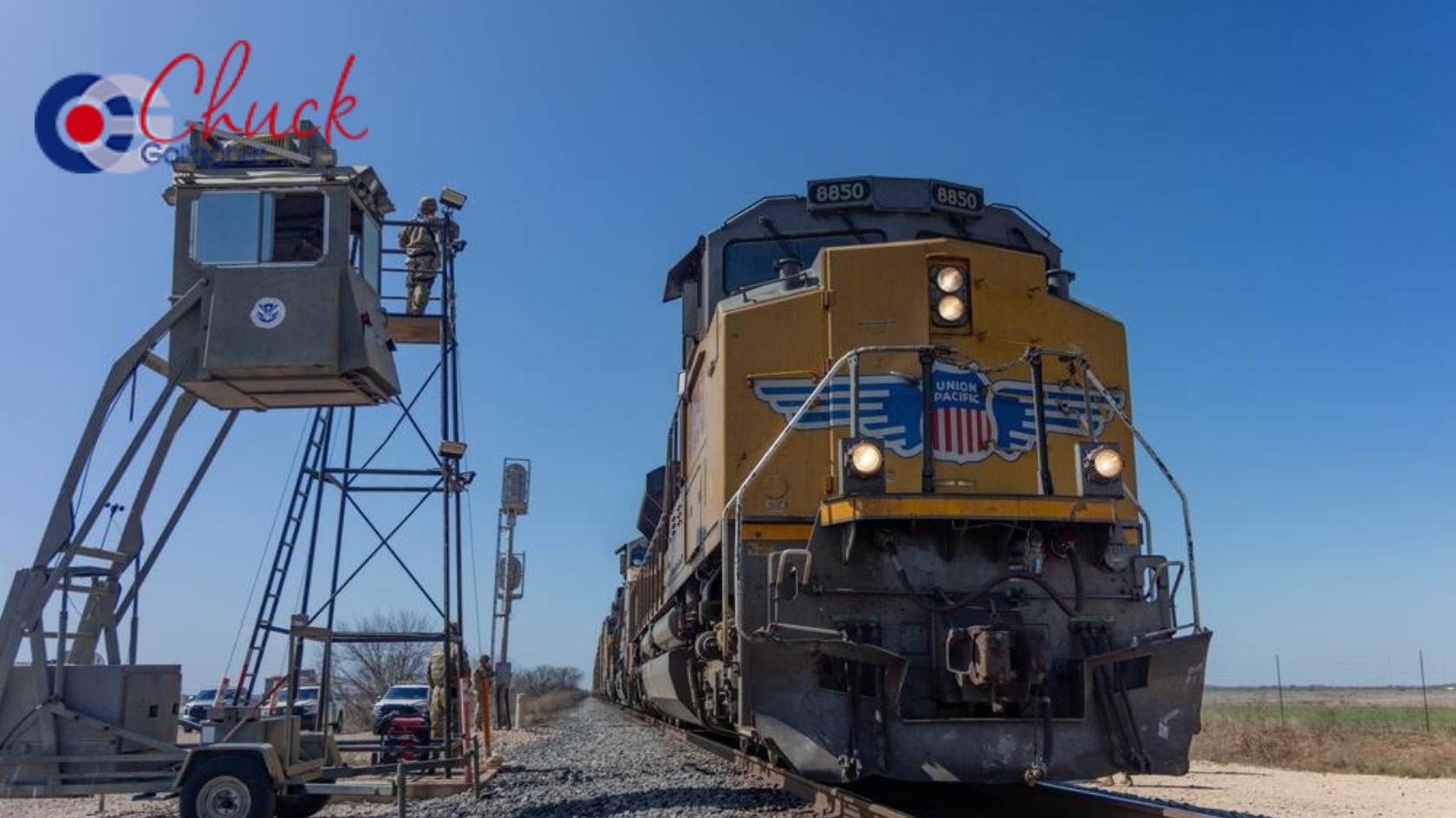
A train sits at the Mexican border loaded with corn. The inspection comes back dirty. Soil, impurities, the kind of finding that stops a shipment cold and costs somebody a week. So somebody has to make a call. Clean the load and eat the delay. Or pay two thousand dollars and roll on through.
They paid. Train after train. For six years.
On July 17, 2026, the Justice Department announced that The Scoular Company, an Omaha agricultural supply chain business, entered a three-year deferred prosecution agreement on one count of conspiracy to violate the anti-bribery provisions of the Foreign Corrupt Practices Act. Total cost: $10,183,872. A criminal penalty of $9,769,521 and forfeiture of $414,351.
Two thousand dollars a train. That is where it started.
What Does a Bribe Look Like on an Invoice?
According to court documents filed in the Western District of Texas, between 2013 and 2019 Scoular used third-party customs brokers to move shipments of corn and other agricultural products into Mexico. Under Mexican law, those shipments were subject to inspection for dirt, soil, and other impurities. When inspections turned up problems, Scoular employees authorized the brokers to pay Mexican officials to wave the trains through.
Roughly two thousand dollars per train. The brokers billed it back to Scoular as a reinspection fee, and Scoular reimbursed it. Prosecutors say the company authorized more than $400,000 in bribes and avoided more than $6.5 million in fees and costs. Employees discussed the shipments and the payments over WhatsApp, which is precisely where investigators found them.
Now, the way I see it, that is the part worth sitting with. Nobody had to write the word bribe on anything. The money already had a name. It went into the books as a fee, and a fee is something a business pays every day of the week. Whoever approved it never blinked.
That is how this works. The dangerous line item is never the one that looks suspicious. It is the one that looks like accounting.
As a business ethics keynote speaker, I have watched this same pattern play out in company after company. Wrongdoing rarely announces itself. It shows up dressed as routine, and it stays because nobody wants to be the person who slows down a shipment over a fee.
Didn’t Washington Say the FCPA Was Over?
A lot of executives believed exactly that. They were wrong.
On February 10, 2025, an executive order paused FCPA enforcement for up to 180 days and directed the Justice Department to draft new guidance. Plenty of commentary treated it as the end of foreign bribery enforcement in America.
You can see why people heard it that way. The numbers backed them up. For the first time in twenty-five years, the Securities and Exchange Commission brought no FCPA enforcement actions in a calendar year, and its FCPA unit appears to have been dissolved. Investigations went quiet. If you ran a company with exposure overseas, the signal looked unmistakable.
But nobody in authority ever said bribery was legal. That phrase you heard everywhere, the cost of doing business, came from the commentary, not from the order. What the order actually said was that enforcement had grown too broad and was hurting American companies competing abroad. Those are different claims. One is a policy argument. The other is permission, and permission was never granted.
You can argue about why the order was written, and people do. Supporters said American companies were being punished for practices their foreign competitors treat as ordinary, and that the law had drifted into policing routine commerce. Critics said it was a favor to business wearing a competitiveness costume. My honest read is that both can hold a piece of the truth at once, and that the argument is mostly beside the point for whoever is signing off on an invoice, because the statute never moved.
A pause is not a repeal. No executive order erases a statute. On June 9, 2025, Deputy Attorney General Todd Blanche issued guidelines that lifted the pause and named the priorities: serious misconduct, harm to American economic and national security interests, and at the very top of the list, bribery tied to cartels and transnational criminal organizations.
Scoular is what those priorities look like when they land on a real company with real employees.
Why This Case, and Why Now?
Worth asking out loud.
A resolution that ties a corn shipper to cartel money is close to a perfect advertisement for the new guidelines. Read generously, the department simply applied its stated priorities and this is where they led. Border trade. Third-party intermediaries. Money that ended up in the wrong hands. The case fits because the conduct fits.
Read skeptically, a department that had gone quiet for the better part of a year needed a case proving those priorities were real, and this one was sitting in the pipeline with the cartel connection already documented.
Both readings fit the public record. Neither is provable from outside the building. And here is the part that ought to settle it for anyone running a company. The exposure was identical under both. Motive on the government’s side changes the headline. It does not change the invoice, the WhatsApp thread, or the ten million dollars.
Here is what ought to keep a general counsel awake. The conduct ended in 2019, under a different administration with entirely different enforcement instincts. The statute of limitations does not care who occupies the White House. Any company that quietly stood down its anti-corruption program in the spring of 2025 is still holding the bag for everything that came before.
Why Did the Cartel Connection Matter If Nobody Knew?
This is the hinge of the case.
Investigators followed the money and found that some of it ultimately benefited people associated with the criminal operations of a cartel at the U.S.-Mexico border. The Justice Department said plainly that neither Scoular nor its employees knew this. Then it cited the connection anyway, as a factor in the seriousness of the offense.
Justin R. Simmons, the U.S. Attorney for the Western District of Texas, put it hard. Nothing crosses into or out of Mexico, he said, without approval and payment to Mexican drug cartels, and American businesses trading across that border carry real responsibility not to fund them.
Let me be clear about what happened there. Ignorance excused nothing. Scoular did not set out to fund a cartel. Scoular set out to move corn. But the moment you hand cash to a third party and tell him to make a problem disappear, you have given up all say in where that money lands. You do not get to claim the destination you preferred.
Every choice has a consequence. Sometimes the consequence is not the one you bargained for. It is still yours.
What Did Cooperation Actually Buy?
Something. Not everything.
Scoular did not self-disclose, which cost it the steepest discounts available under the Justice Department’s voluntary self-disclosure policy. It did earn credit for cooperation, including an internal investigation, evidence turned over, and detailed factual presentations. It earned credit for remediation too, which covered restructuring the compliance function under senior leadership oversight, cutting ties with the customs brokers connected to the reinspection fee process, tightening third-party screening, and rewriting the code of conduct.
The result was a twenty-five percent reduction off the bottom of the applicable sentencing guidelines range and no independent monitor. Scoular reports on itself for three years instead. That last part matters more than it sounds. A monitor is somebody else’s judgment installed inside your company for years, at your expense. Being trusted to report on yourself is not a compliment the department hands out casually.
Meanwhile Carlos Leopoldo Alvelais, the customs broker who paid bribes on Scoular’s behalf, pleaded guilty to conspiracy in October 2025.
That contrast is what I keep returning to in my work as a business ethics keynote speaker. The company writes a check and moves on. The man who carried the envelope stands in front of a judge.
Two thousand dollars a train. Ask yourself who is paying for it now.
Frequently Asked Questions
Is the Foreign Corrupt Practices Act still being enforced in 2026?
Yes. A February 2025 executive order paused enforcement for up to 180 days, but Justice Department guidelines issued in June 2025 ended that pause and set new priorities. Enforcement volume dropped sharply, and the Securities and Exchange Commission brought no FCPA actions at all during calendar year 2025. The Scoular resolution announced on July 17, 2026 shows the statute remains very much alive for cases that fit the department’s stated priorities.
What did The Scoular Company actually do?
According to court documents, between 2013 and 2019 Scoular authorized third-party customs brokers to bribe Mexican border officials so shipments of corn and other products could cross despite failed inspections. The bribes ran roughly $2,000 per train and were billed back to the company as reinspection fees. Scoular authorized more than $400,000 in payments and avoided more than $6.5 million in fees and costs.
Can a company be held responsible if it did not know the bribes reached a cartel?
Yes, and Scoular is the example. The Justice Department stated that neither the company nor its employees knew a portion of the payments benefited people tied to cartel operations, then cited that fact as part of what made the offense serious. Once money leaves your hands through an intermediary, you no longer control where it goes. You remain accountable for having sent it.
Does cooperating with the Justice Department actually lower the penalty?
It helps, though not nearly as much as self-disclosure would. Scoular did not voluntarily disclose the conduct, so it lost the steeper discounts available under Justice Department policy. Its cooperation and remediation still earned a twenty-five percent reduction off the bottom of the sentencing guidelines range and spared it an independent compliance monitor. As a business ethics keynote speaker, I would put the arithmetic simply: disclosure costs less than discovery.
What should companies shipping goods across the Mexican border do now?
Treat customs brokers and freight intermediaries as high-risk third parties rather than as ordinary vendors. That means anti-corruption due diligence before engagement, audit rights written into contracts, documentation showing what services were actually performed, and a hard look at any recurring fee nobody can fully explain. Recurring charges with vague names are where these cases live.
The Scoular case did not turn on a criminal mastermind. It turned on ordinary people making a small, convenient decision over and over until the total stopped being small. That is the pattern I bring to boardrooms, compliance teams, and conference stages, and it is not a lecture about rules. It is an honest look at how good people talk themselves into bad math, told by someone who has lived the consequence side of that equation. If your organization carries third-party risk nobody has examined lately, or if your people need to hear what accountability actually sounds like, let’s talk. Chuck Gallagher speaks nationwide on ethics, accountability, and consequence. Start the conversation at ChuckGallagher.com.
Five Questions for Reflection
1. Where in our organization does a payment carry a name that keeps anyone from asking what it actually purchased?
2. If we handed a third party cash today and told him to solve a problem, could we say with confidence where that money would end up?
3. What did we change about our anti-corruption program between February and June of 2025, and would we defend that decision to a prosecutor five years from now?
4. Who in this company would be the individual standing in front of a judge if our conduct became a case, and does that person know it?
5. What is the smallest recurring expense in our books that no one has ever been asked to explain?
